Job Matching
Start with jobs that fit your skills, goals and experience. Your personal job assessment shows why a role may be worth your time before you apply.
 VELOCITYSEARCH GROUPHomeSearch JobsJobSearch Hub

Follow the steps below.
Start with jobs that fit your skills, goals and experience. Your personal job assessment shows why a role may be worth your time before you apply.
Build a resume for the role—not a generic resume for every role. You’ll also see what changed and why it matters to that employer.
See what an employer may find when they search your name. Then make sure your online presence supports the story your resume tells.
Find the people and connections that can help you get seen. We’ll teach you how to reach out without sounding awkward or asking strangers for a job.
Learn the company, understand who you’re meeting and connect your real experience to the role. Then practice the questions you’re most likely to hear.

Your resume tells us where you’ve been. These questions tell us where you want to go next.
A useful match should fit:
Upload your resume and tell us your preferences. Still deciding? Keep the search broad.
These are the roles that best fit your experience and goals. Your matching method stays private; you see the jobs and the reasons each one deserves a closer look.
Northline Manufacturing · Atlanta, GA
Beacon Systems · Remote
Meridian Group · Charlotte, NC

Your matched jobs arrive here with the assessment, resume and next step attached.
Offers you receive will appear here.
Keep the history without cluttering your active search.
Know what to research, what to bring and how to make your real experience easier to understand.
Paste your interview invitation below. We’ll pull out the company, role, date, time, interview type, location and interviewer names.
Read each original report in the Hub or download the same PDF.
Organization background, leadership, team structure, role context, compensation information and research sources.
Who you will meet, each person’s responsibilities, what each person is deciding and questions prepared for each conversation.
Your resume mapped to the role, questions to expect, questions to ask and preparation for interview day.
Read these before any interview. They go with the three reports above.
What each kind of interview is, how to spot it and how to answer it.
You are choosing too. How to judge a company by the way it interviews you, before you say yes.
How to withdraw quickly and kindly, with notes ready to send.
How to Handle Every Kind of Interview and Decide Whether the Job Is Right for You.
The three guides above are the free Field Guide, with advice for your career level. The complete eBook and its workbook are in progress.
By D. K. Bennett · Published by Velocity Search GroupChoose a starting point or tell Velo about the interview, the role and what you want to practice.
Design preview. Live AI, voice and saving are not connected.Schedule a one-on-one call with a Senior Recruiter for direct guidance on your interview and job search.
Most interviews use a few of these types. Knowing what each one is looking for makes it easier to answer.
| Type | What it is | How you can tell |
|---|---|---|
| Screening call | A short first call, usually with a recruiter, to check the basics before you meet the hiring manager | Often 20 to 30 minutes by phone or video, with questions about why this job, where you live, your schedule and pay |
| "Tell me about yourself" | An opening question asking for a short summary of who you are at work | It opens most interviews, sometimes as "Walk me through your resume" |
| Behavioral questions | Questions about what you actually did in a real past situation | They start with "Tell me about a time when..." or "Give me an example of..." |
| Situational questions | A made-up work problem, to see how you would handle it | They start with "What would you do if..." |
| Framework drill | A format they hand you, to see how fast you learn it and use it | "Use this format to describe..." |
| Thinking question | A question with no single right answer, to hear how you reason | "Give me three reasons why..." or "How would you figure out..." |
| Pressure on purpose | An interview made uncomfortable on purpose, to see how you handle pressure | Rapid questions, "Anything else?" again and again, long silences, pushback |
| Skills test or live task | A piece of the real work, done while they watch | Typing, writing, a spreadsheet or a research task, often by sharing your screen |
| Homework or video | A task to finish after the interview and send back | A deadline and a set format, sometimes a recorded video |
| Recorded video interview | You record answers to questions on a screen, with no one there live | An email link to a video site, a timer, and often one try per answer |
| Several interviewers | More than one person interviewing you at the same time | More than one name on the invitation, or more than one person on the call |
| Culture and values | Questions about how you like to work, to see whether you fit the team | "What kind of team do you work best in?" |
| Founder or executive | An interview with the company’s founder or a senior leader | Big-picture questions, like "Why us?" and "Where are you headed?" |
What they want: they are checking the basics: that the job, the location, the schedule and the pay can work for both of you.
What they want: a short, clear picture of who you are at work and why you are here.
Before any interview, write down the accomplishments you are proud of: results with a number, honors and awards, and the times you were first or best. With the list in front of you, you can work them into "Tell me about yourself" and your other answers without searching for them on the spot.
What they want: proof from your past, because how you handled something before is the best clue to how you will handle it again.
The STAR method is a simple way to tell that story in four parts:
What they want: to see how you think through a problem you have not faced yet.
What they want: to see how fast you learn something new and put it to use.
What they want: to hear how you reason when there is no single right answer.
Mostly, they want to see how you handle pressure. The usual reasons:
These lines buy you time without sounding stuck:
Afterwards, write down what they asked while you still remember it.
What they want: to see the real work, done carefully.
Before the day. Re-read the job post. If it names software (Excel, a CRM, a design tool), ask the recruiter whether it is a must-have or a nice-to-have. A job post that talks a lot about software skills usually means a live task will use them. If it is a must-have and you are rusty, a short refresher the week before is time well spent.
What they want: a work sample, done the way they asked.
What they want: clear, short answers on camera.
What they want: to see how you work with different people at once.
What they want: to know how you like to work and whether you would fit the team.
What they want: to see that you understand the business and can think about the big picture.
You are not only hoping to be chosen; you are choosing too. Checking the fit before you say yes is how you avoid taking a job you leave a few months later.
"Remember, this is a 360-degree interview. You are interviewing them as much as they are interviewing you. Your decision about the company is equally as important as their decision about you."
How a company runs its interviews is a preview of how it runs the job. Tally what you saw.
| Plus | Minus |
|---|---|
| On time, and clear about the steps and the timeline | Late, rescheduled at the last minute, or unsure what happens next |
| Everyone you met described the job the same way | Each person described a different job |
| A tough exercise came with a reason ("we want to see how you think on your feet") | Pressure with no reason, or pushing that felt like they wanted you to fail |
| They answered your questions plainly | They dodged questions about hours, pay or the last person in the job |
| They spoke well of the team and past employees | They complained about the last person or the team |
| They asked about your goals, not only their needs | They talked only about what they need from you |
| Homework that fits the job and takes a reasonable amount of time | Homework that takes hours, or looks like free work for them |
One minus is not a verdict. Two or three together usually describe the culture you would be working in.
If they pushed hard and tested your breaking point, the job itself is probably high pressure too. Think about how it felt. If you were fine with it, keep going. If you were unhappy the whole time, it is probably not the right role for you, and that is fine. If you are not sure, ask: "What does pressure look like day to day in this job?"
You asked good questions. Here is how to tell what the answers can mean, and what to ask next.
| What they said | What it can mean | What to ask next |
|---|---|---|
| "The last person in this job was promoted." | A good sign: the job leads somewhere. | "How long were they in the role before the move?" |
| "Most of our leaders started in entry-level roles." | Real promotion from within, or a recruiting line. Check it. | Look up people with the title on LinkedIn: how long they stayed and where they went. |
| "It’s fast-paced. You’ll wear a lot of hats." | A lean team: great learning, or too much for one person. | "What does a normal week look like, and what are the hours?" |
| "We’re like a family." | Close-knit, or blurred lines on hours and boundaries. | "How does the team handle evenings and weekends?" |
| "It depends" (on hours, pay or growth) | No clear answer yet, or one they would rather not give. | Ask for an example: "What happened for the last person?" |
| "We need someone who can hit the ground running." | Little training. | "What does training look like in the first month?" |
Write their answers down right after the call. They are your evidence when you decide. Employee reviews help too: look for the same complaint coming up again and again.
What matters changes with the job. Your career level: Early Career
A real training plan for the first month; a manager with time to coach; people who started in this job and moved up; steady, predictable hours.
"Hit the ground running" with no training; the entry job turns over often; unpaid trial work; vague answers about hours.
Clear scope and decision rights; goals that come with the budget, people and tools to reach them; a manager who promotes people; a stable team.
The role has turned over several times; goals with no resources; unclear who decides; a recent reorganization or a leader on the way out.
The CEO and board agree on the mandate; authority that matches the accountability; open financials; a leadership team that has stayed.
Each interviewer describes a different mandate; results expected without control of budget or hiring; a short run for the last person in the role; reluctance to share the numbers.
If two or more stay unticked, this is probably not your job, and that is fine. Say no thanks kindly and keep your energy for the right one (Saying No Thanks).
"You have an offer in hand. That is amazing. Congratulations! Now is the time to not be too quick in your answer. It’s OK to take a day or two and be thoughtful. Think through what you needed the first day you started looking for a new role. Do they offer you that?"
When you know a job is not for you, say so quickly, kindly and in writing. Recruiters and hiring managers change companies, and they remember the people who handled this well.
One sentence is enough. "The commute is the main reason; it is not workable for me day to day." Or: "It came down to fit with what I am looking for right now."
Declining an actual offer is covered in The Close, "Accept, Decline or Withdraw."
Velo compares the job with your resume, then asks focused questions to uncover relevant experience.
One generic resume does not fit all jobs.
Velo guides the conversation, but your experience remains the source. You can ask questions, clarify details, and review the final result.
Your complete career history gives Velo the foundation for an accurate, consistent rewrite.
Velo compares the role with your resume and identifies the experience that needs more context.
Answer focused questions about the gaps, then receive a stronger resume using only details you can support.
Your two completed deliverables are ready in one place.

Beacon Systems
Velo asks focused questions that bring out your real experience, results and context—without making anything up.
Focused help at four important points in your search.
Connect your real skills to the interview.
Uncover accomplishments, results and context.
Turn a real relationship into a clear message.
Ask questions, clarify choices and plan next steps.
Make sure they find the right story.
Your resume may earn attention, but an outdated profile, conflicting job date or public post can create enough doubt to remove an otherwise qualified candidate from consideration.
Your digital footprint does not need to be perfect. It should be current, credible and consistent with the experience you are asking an employer to trust.
Review more than the first result and look at the broader story connected to your name.
Compare your titles, dates and experience online with the resume you are sending.
Identify public details that could create confusion or weaken the impression you intend to make.
Know what deserves attention first so you can make focused, practical changes.
This is not about inventing a different version of yourself. It is about making sure outdated or incomplete information does not speak louder than your real experience.
The Velo Digital Footprint Check helps you review information you choose to provide and put your best professional foot forward. VSG cannot guarantee what information another person may find online or how an employer, recruiter, customer, colleague, or anyone else may interpret, react to, or judge it. This tool is voluntary, is not a background check or legal advice, and does not make employment decisions. You may skip or stop at any time without affecting your other JobSearch Hub services.
Learn to keep a healthy, active network.
Applying still matters. Networking adds context and can help the right person understand your experience sooner.
Source: Glassdoor Economic Research, based on 1.24 million interview reviews.
Start with managers, colleagues, clients and vendors who have already seen your work.
Use shared schools, employers, industries and people to create a credible reason to connect.
Identify the hiring managers for these jobs and the internal recruiters who fill them.
Find the association leaders, organizers and well-connected people who can open many rooms.
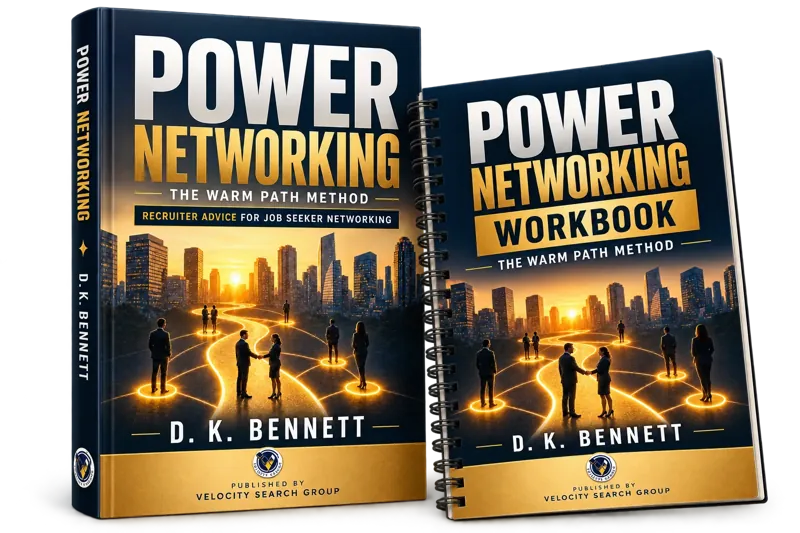
Use the method to move from a target opportunity to a professional conversation with purpose.
Clarify the companies, roles and problems that deserve your attention.
Find alumni, colleagues, associations and shared interests that create context.
Use concise messages that ask for perspective instead of a favor.
Bring informed questions that make the exchange valuable for both people.
Track thank-yous, introductions and next steps without becoming a nuisance.
Networking works best when the first goal is understanding—not asking someone to hand you a job.
A private, candidate-controlled design preview.
A private plan built from relationships you choose to describe.
See what employers may find—and decide what needs your attention first.
The paid edition expands the free Field Guide into the complete search audit, recruiter red-flag review, Fix-It Playbook and maintenance system.
Open the complete eBook inside the Hub and return to the same section later.
Download a private PDF copy from your paid account.
Move directly from the guidance into the Digital Footprint workbook.
Turn what you find into a clear, manageable action plan.
Work through the search audit, document what needs attention and keep a practical record of what you changed.
Capture what appears across the complete audit without relying on memory.
Separate credibility issues that need attention now from improvements that can wait.
Keep a simple review schedule so old information does not take over again.
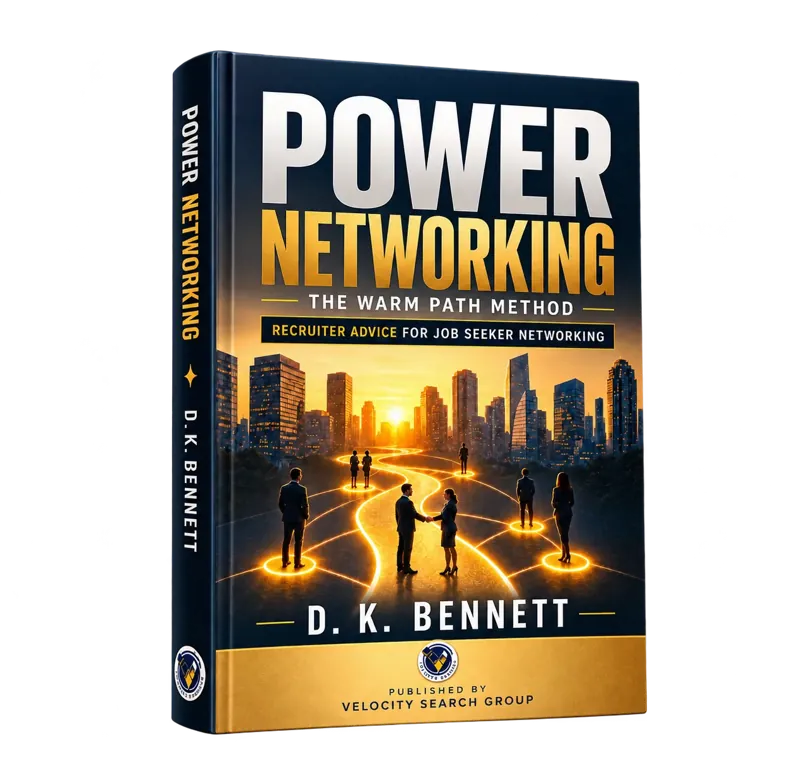
Build real professional relationships before you need to ask for help.
The paid edition expands the free Field Guide into the complete eBook + workbook system for reconnecting, requesting introductions, following up and maintaining a healthy network.
Open the complete eBook inside the Hub and return to the same section later.
Choose language for reconnection, introductions and thoughtful follow-up.
Move directly from the guidance into the Power Networking Workbook.
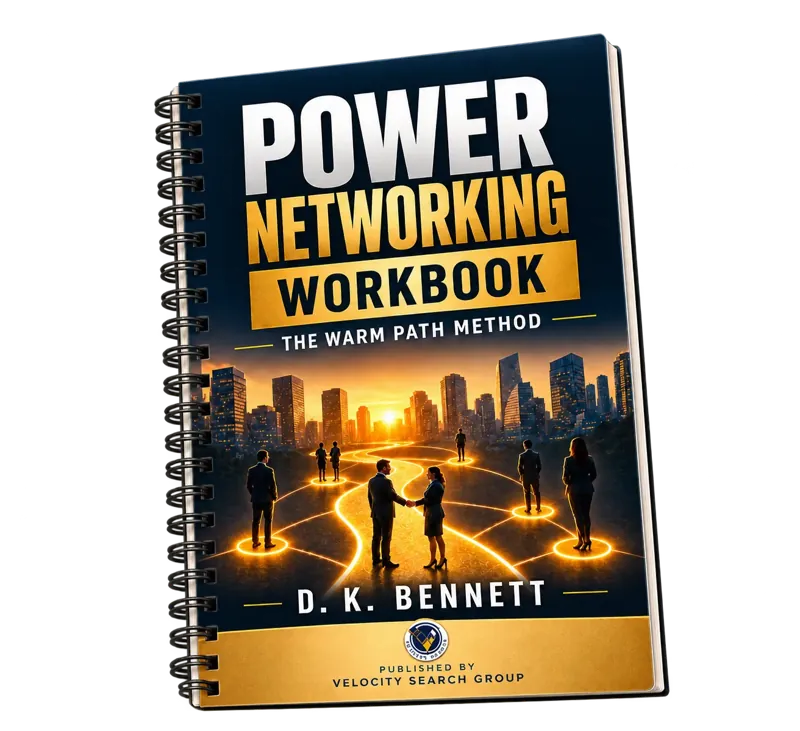
Turn the people you already know into a thoughtful, sustainable networking plan.
Map relationships, plan outreach, save message drafts and track the follow-up that keeps a network active.
From the Final Minutes of the Interview to Accepting the Offer
Practical recruiter guidance for ending the interview well, following up, evaluating an offer, negotiating professionally and protecting the transition into your new role.

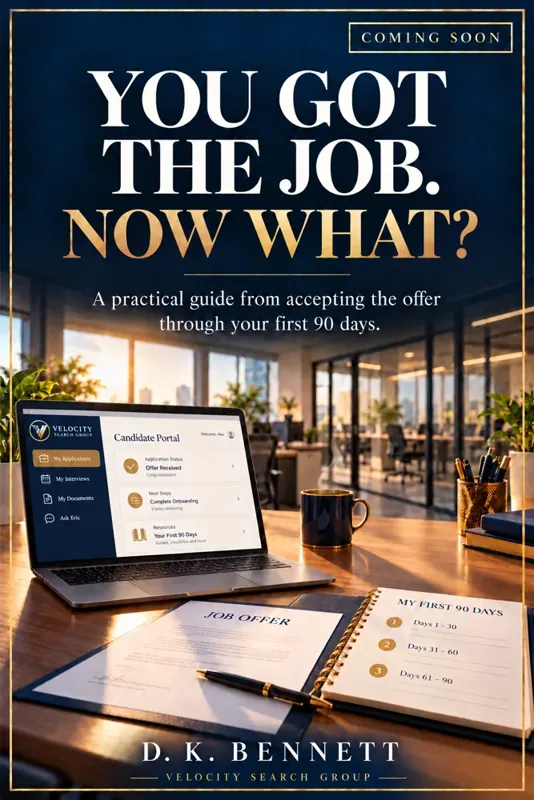
A practical guide from accepting the offer through your first 90 days
Read the complete eBook online, then use the separate workbook companion to build your plan.
Complete one short section at a time on your phone or computer. Entries stay only in your current browser session.
Download the approved printable and fillable PDF for paper, tablet markup or your preferred PDF application.
Use the blank workbook on your own device. VSG does not store completed workbook answers.
The complete VSG resource library, with recommendations for your career level highlighted—not hidden.
Affiliate disclosure: These preview cards use direct links. When approved affiliate tracking is connected, every commissionable link will clearly say that VSG may earn a commission if you purchase through it. That will not change your price or determine whether a resource is included.
See what you have now, upgrade your membership or purchase only the additional help you need.
Paid Hub preview · Sample usage shown for design review
Move from free access to the paid monthly membership, or restore a canceled membership.
Add more uses of a product already available in your account without changing membership.
Purchase a single product when a monthly membership is not the right fit.
Purchase a focused session separately when you want direct guidance from a senior recruiter.
Design preview only. Checkout, billing, credit delivery, cancellations and recruiter scheduling are not connected.