Job Matching
Start with jobs that fit your skills, goals and experience. Your personal job assessment shows why a role may be worth your time before you apply.
 VELOCITYSEARCH GROUPHomeSearch JobsJobSearch Hub

Follow the steps below.
Start with jobs that fit your skills, goals and experience. Your personal job assessment shows why a role may be worth your time before you apply.
Build a resume for the role—not a generic resume for every role. You’ll also see what changed and why it matters to that employer.
See what an employer may find when they search your name. Then make sure your online presence supports the story your resume tells.
Find the people and connections that can help you get seen. We’ll teach you how to reach out without sounding awkward or asking strangers for a job.
Learn the company, understand who you’re meeting and connect your real experience to the role. Then practice the questions you’re most likely to hear.

Your resume tells us where you’ve been. These questions tell us where you want to go next.
A useful match should fit:
Upload your resume and tell us your preferences. Still deciding? Keep the search broad.
These are the roles that best fit your experience and goals. Your matching method stays private; you see the jobs and the reasons each one deserves a closer look.
Northline Manufacturing · Atlanta, GA
Beacon Systems · Remote
Meridian Group · Charlotte, NC

Your matched jobs arrive here with the assessment, resume and next step attached.
Offers you receive will appear here.
Keep the history without cluttering your active search.
Know what to research, what to bring and how to make your real experience easier to understand.
Paste your interview invitation below. We’ll pull out the company, role, date, time, interview type, location and interviewer names.
Read each original report in the Hub or download the same PDF.
Organization background, leadership, team structure, role context, compensation information and research sources.
Who you will meet, each person’s responsibilities, what each person is deciding and questions prepared for each conversation.
Your resume mapped to the role, questions to expect, questions to ask and preparation for interview day.
Read these before any interview. They go with the three reports above.
What each kind of interview is, how to spot it and how to answer it.
You are choosing too. How to judge a company by the way it interviews you, before you say yes.
How to withdraw quickly and kindly, with notes ready to send.
How to Handle Every Kind of Interview and Decide Whether the Job Is Right for You.
The three guides above are the free Field Guide, with advice for your career level. The complete eBook and its workbook are in progress.
By D. K. Bennett · Published by Velocity Search GroupChoose a starting point or tell Velo about the interview, the role and what you want to practice.
Design preview. Live AI, voice and saving are not connected.Schedule a one-on-one call with a Senior Recruiter for direct guidance on your interview and job search.
Most interviews use a few of these types. Knowing what each one is looking for makes it easier to answer.
| Type | What it is | How you can tell |
|---|---|---|
| Screening call | A short first call, usually with a recruiter, to check the basics before you meet the hiring manager | Often 20 to 30 minutes by phone or video, with questions about why this job, where you live, your schedule and pay |
| "Tell me about yourself" | An opening question asking for a short summary of who you are at work | It opens most interviews, sometimes as "Walk me through your resume" |
| Behavioral questions | Questions about what you actually did in a real past situation | They start with "Tell me about a time when..." or "Give me an example of..." |
| Situational questions | A made-up work problem, to see how you would handle it | They start with "What would you do if..." |
| Framework drill | A format they hand you, to see how fast you learn it and use it | "Use this format to describe..." |
| Thinking question | A question with no single right answer, to hear how you reason | "Give me three reasons why..." or "How would you figure out..." |
| Pressure on purpose | An interview made uncomfortable on purpose, to see how you handle pressure | Rapid questions, "Anything else?" again and again, long silences, pushback |
| Skills test or live task | A piece of the real work, done while they watch | Typing, writing, a spreadsheet or a research task, often by sharing your screen |
| Homework or video | A task to finish after the interview and send back | A deadline and a set format, sometimes a recorded video |
| Recorded video interview | You record answers to questions on a screen, with no one there live | An email link to a video site, a timer, and often one try per answer |
| Several interviewers | More than one person interviewing you at the same time | More than one name on the invitation, or more than one person on the call |
| Culture and values | Questions about how you like to work, to see whether you fit the team | "What kind of team do you work best in?" |
| Founder or executive | An interview with the company’s founder or a senior leader | Big-picture questions, like "Why us?" and "Where are you headed?" |
What they want: they are checking the basics: that the job, the location, the schedule and the pay can work for both of you.
What they want: a short, clear picture of who you are at work and why you are here.
Before any interview, write down the accomplishments you are proud of: results with a number, honors and awards, and the times you were first or best. With the list in front of you, you can work them into "Tell me about yourself" and your other answers without searching for them on the spot.
What they want: proof from your past, because how you handled something before is the best clue to how you will handle it again.
The STAR method is a simple way to tell that story in four parts:
What they want: to see how you think through a problem you have not faced yet.
What they want: to see how fast you learn something new and put it to use.
What they want: to hear how you reason when there is no single right answer.
Mostly, they want to see how you handle pressure. The usual reasons:
These lines buy you time without sounding stuck:
Afterwards, write down what they asked while you still remember it.
What they want: to see the real work, done carefully.
Before the day. Re-read the job post. If it names software (Excel, a CRM, a design tool), ask the recruiter whether it is a must-have or a nice-to-have. A job post that talks a lot about software skills usually means a live task will use them. If it is a must-have and you are rusty, a short refresher the week before is time well spent.
What they want: a work sample, done the way they asked.
What they want: clear, short answers on camera.
What they want: to see how you work with different people at once.
What they want: to know how you like to work and whether you would fit the team.
What they want: to see that you understand the business and can think about the big picture.
You are not only hoping to be chosen; you are choosing too. Checking the fit before you say yes is how you avoid taking a job you leave a few months later.
"Remember, this is a 360-degree interview. You are interviewing them as much as they are interviewing you. Your decision about the company is equally as important as their decision about you."
How a company runs its interviews is a preview of how it runs the job. Tally what you saw.
| Plus | Minus |
|---|---|
| On time, and clear about the steps and the timeline | Late, rescheduled at the last minute, or unsure what happens next |
| Everyone you met described the job the same way | Each person described a different job |
| A tough exercise came with a reason ("we want to see how you think on your feet") | Pressure with no reason, or pushing that felt like they wanted you to fail |
| They answered your questions plainly | They dodged questions about hours, pay or the last person in the job |
| They spoke well of the team and past employees | They complained about the last person or the team |
| They asked about your goals, not only their needs | They talked only about what they need from you |
| Homework that fits the job and takes a reasonable amount of time | Homework that takes hours, or looks like free work for them |
One minus is not a verdict. Two or three together usually describe the culture you would be working in.
If they pushed hard and tested your breaking point, the job itself is probably high pressure too. Think about how it felt. If you were fine with it, keep going. If you were unhappy the whole time, it is probably not the right role for you, and that is fine. If you are not sure, ask: "What does pressure look like day to day in this job?"
You asked good questions. Here is how to tell what the answers can mean, and what to ask next.
| What they said | What it can mean | What to ask next |
|---|---|---|
| "The last person in this job was promoted." | A good sign: the job leads somewhere. | "How long were they in the role before the move?" |
| "Most of our leaders started in entry-level roles." | Real promotion from within, or a recruiting line. Check it. | Look up people with the title on LinkedIn: how long they stayed and where they went. |
| "It’s fast-paced. You’ll wear a lot of hats." | A lean team: great learning, or too much for one person. | "What does a normal week look like, and what are the hours?" |
| "We’re like a family." | Close-knit, or blurred lines on hours and boundaries. | "How does the team handle evenings and weekends?" |
| "It depends" (on hours, pay or growth) | No clear answer yet, or one they would rather not give. | Ask for an example: "What happened for the last person?" |
| "We need someone who can hit the ground running." | Little training. | "What does training look like in the first month?" |
Write their answers down right after the call. They are your evidence when you decide. Employee reviews help too: look for the same complaint coming up again and again.
What matters changes with the job. Your career level: Early Career
A real training plan for the first month; a manager with time to coach; people who started in this job and moved up; steady, predictable hours.
"Hit the ground running" with no training; the entry job turns over often; unpaid trial work; vague answers about hours.
Clear scope and decision rights; goals that come with the budget, people and tools to reach them; a manager who promotes people; a stable team.
The role has turned over several times; goals with no resources; unclear who decides; a recent reorganization or a leader on the way out.
The CEO and board agree on the mandate; authority that matches the accountability; open financials; a leadership team that has stayed.
Each interviewer describes a different mandate; results expected without control of budget or hiring; a short run for the last person in the role; reluctance to share the numbers.
If two or more stay unticked, this is probably not your job, and that is fine. Say no thanks kindly and keep your energy for the right one (Saying No Thanks).
"You have an offer in hand. That is amazing. Congratulations! Now is the time to not be too quick in your answer. It’s OK to take a day or two and be thoughtful. Think through what you needed the first day you started looking for a new role. Do they offer you that?"
When you know a job is not for you, say so quickly, kindly and in writing. Recruiters and hiring managers change companies, and they remember the people who handled this well.
One sentence is enough. "The commute is the main reason; it is not workable for me day to day." Or: "It came down to fit with what I am looking for right now."
Declining an actual offer is covered in The Close, "Accept, Decline or Withdraw."
Velo compares the job with your resume, then asks focused questions to uncover relevant experience.
One generic resume does not fit all jobs.
Velo guides the conversation, but your experience remains the source. You can ask questions, clarify details, and review the final result.
Your complete career history gives Velo the foundation for an accurate, consistent rewrite.
Velo compares the role with your resume and identifies the experience that needs more context.
Answer focused questions about the gaps, then receive a stronger resume using only details you can support.
Your two completed deliverables are ready in one place.

Beacon Systems
Velo asks focused questions that bring out your real experience, results and context—without making anything up.
Focused help at four important points in your search.
Connect your real skills to the interview.
Uncover accomplishments, results and context.
Turn a real relationship into a clear message.
Ask questions, clarify choices and plan next steps.
Make sure they find the right story.
Your resume may earn attention, but an outdated profile, conflicting job date or public post can create enough doubt to remove an otherwise qualified candidate from consideration.
Your digital footprint does not need to be perfect. It should be current, credible and consistent with the experience you are asking an employer to trust.
Review more than the first result and look at the broader story connected to your name.
Compare your titles, dates and experience online with the resume you are sending.
Identify public details that could create confusion or weaken the impression you intend to make.
Know what deserves attention first so you can make focused, practical changes.

This is not about inventing a different version of yourself. It is about making sure outdated or incomplete information does not speak louder than your real experience.
The Velo Digital Footprint Check helps you review information you choose to provide and put your best professional foot forward. VSG cannot guarantee what information another person may find online or how an employer, recruiter, customer, colleague, or anyone else may interpret, react to, or judge it. This tool is voluntary, is not a background check or legal advice, and does not make employment decisions. You may skip or stop at any time without affecting your other JobSearch Hub services.
Learn to keep a healthy, active network.
Applying still matters. Networking adds context and can help the right person understand your experience sooner.
Source: Glassdoor Economic Research, based on 1.24 million interview reviews.
Start with managers, colleagues, clients and vendors who have already seen your work.
Use shared schools, employers, industries and people to create a credible reason to connect.
Identify the hiring managers for these jobs and the internal recruiters who fill them.
Find the association leaders, organizers and well-connected people who can open many rooms.
Use the method to move from a target opportunity to a professional conversation with purpose.
Clarify the companies, roles and problems that deserve your attention.
Find alumni, colleagues, associations and shared interests that create context.
Use concise messages that ask for perspective instead of a favor.
Bring informed questions that make the exchange valuable for both people.
Track thank-yous, introductions and next steps without becoming a nuisance.
Networking works best when the first goal is understanding—not asking someone to hand you a job.
A private, candidate-controlled design preview.
A private plan built from relationships you choose to describe.
See what employers may find—and decide what needs your attention first.
The paid edition expands the free Field Guide into the complete search audit, recruiter red-flag review, Fix-It Playbook and maintenance system.
Open the complete eBook inside the Hub and return to the same section later.
Download a private PDF copy from your paid account.
Move directly from the guidance into the Digital Footprint workbook.
This reader design keeps the complete paid guidance inside the Hub. Final manuscript content will be connected by the delivery engine.
Chapter previews are shown below. The final approved manuscript will replace this preview content in the connected Hub.
Establish what is connected to your name before deciding what deserves attention.
Review the search combinations that reveal the broadest professional picture.
Separate genuine credibility concerns from information that is harmless or unrelated.
Prioritize corrections, privacy changes and profile updates without inventing a new identity.
Understand when removal requests or privacy controls may be worth considering.
Use a simple review schedule to keep professional information current.
This preview demonstrates chapter navigation without publishing unfinished book content.
Turn what you find into a clear, manageable action plan.
Work through the search audit, document what needs attention and keep a practical record of what you changed.
Capture what appears across the complete audit without relying on memory.
Separate credibility issues that need attention now from improvements that can wait.
Keep a simple review schedule so old information does not take over again.
Anything entered here stays only in the current browser session and is cleared when the page refreshes. VSG does not store completed workbook answers.

Build real professional relationships before you need to ask for help.
The paid edition expands the free Field Guide into the complete eBook + workbook system for reconnecting, requesting introductions, following up and maintaining a healthy network.
Open the complete eBook inside the Hub and return to the same section later.
Choose language for reconnection, introductions and thoughtful follow-up.
Move directly from the guidance into the Power Networking Workbook.
This reader design keeps the complete paid guidance inside the Hub. Final manuscript content will be connected by the delivery engine.
The full approved manuscript will appear here in the connected paid Hub. Candidates will be able to read online, move through the chapter menu and download the PDF from their account.
This preview shows the paid delivery experience without publishing unfinished book content.

Turn the people you already know into a thoughtful, sustainable networking plan.
Map relationships, plan outreach, save message drafts and track the follow-up that keeps a network active.
Anything entered here stays only in the current browser session and is cleared when the page refreshes. VSG does not store completed workbook answers.
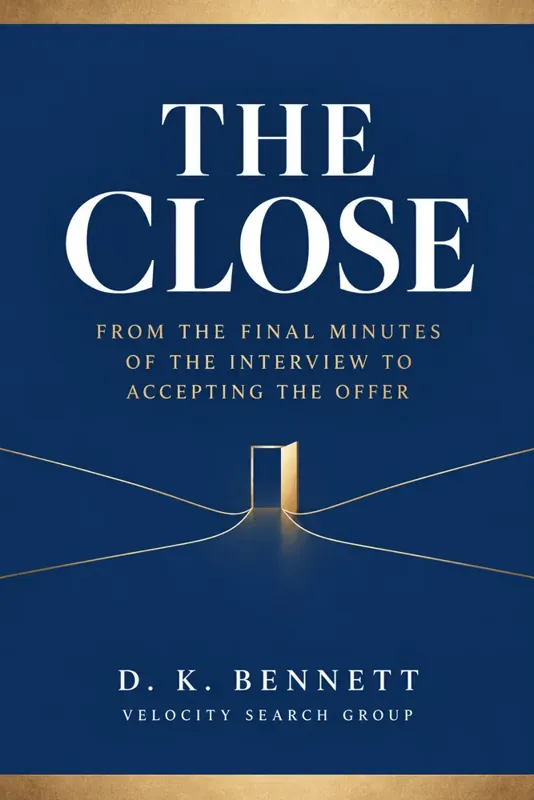
From the Final Minutes of the Interview to Accepting the Offer
Practical recruiter guidance for ending the interview well, following up, evaluating an offer, negotiating professionally and protecting the transition into your new role.
Your chapter menu stays with you as you move from interview follow-up through the offer and start date.
An interview rarely ends with someone announcing, "The interview is now complete." More often, the conversation begins to change. The questions slow down. The interviewer looks at the time, closes a notebook or asks whether you have any final questions. In person, they may shift in their chair or begin gathering papers. On video, their tone may become more conversational and they may mention what happens next.
Recognizing that change helps you finish calmly instead of being surprised by an awkward ending.
None of these signals tells you the final decision. They simply tell you that it is time to become intentional about how you finish.
Some interviews contain signs that the employer is picturing you in the role. The interviewer may introduce you to additional people, spend time selling the company, ask about your start date, discuss references or talk in detail about the problems you would inherit. They may use language such as "when you join" rather than "if we move forward."
Treat those moments as encouraging, not conclusive. Strong candidates are sometimes shown around because the organization follows the same process for everyone. A long interview can be positive, but a short interview is not automatically a rejection. A warm interviewer may simply have a warm style. A reserved interviewer may be taking you very seriously.
The best approach is to notice the evidence without writing the ending for them. Stay engaged, keep listening and close the interview properly whether you think it went extremely well or you are unsure.
Remember: You are still being evaluated until the interaction is fully over. That includes the walk to the lobby, the final handshake, the conversation with an assistant and the few seconds before you disconnect from a video call.
When you meet several people in one day, some of those conversations will be described as informal. "He just wants to meet you." "It's only lunch." "She's not part of the decision." Do not believe it. Every person you meet is a decision maker, and every conversation should be treated as an interview, from the first one of the day to the last.
At the end of the day, everyone compares notes. The person who "just wanted to meet you" gets asked what they thought, and their answer counts. If you were too casual with them, they can speak up and say no. Once one person has a concern, the others can start to change their minds, even if their own conversations with you went well.
I have seen this happen. The person who was only supposed to meet the candidate stepped up and said no, and then everyone changed their minds.
Be just as prepared, professional and interested in the last conversation of the day as you were in the first.
The final minutes are your opportunity to make sure the employer has the clearest possible picture of you. This is not the time for a second presentation. It is the time to identify whether anything important remains unfinished.
If the interviewer raised a specific concern, you may address it briefly before closing. Use judgment. Do not invent an objection because the conversation felt quiet.
You might say:
Before we wrap up, I want to make sure I addressed your question about my experience with multi-site teams. Is there anything else you would like me to clarify?
That approach is direct without being defensive. It gives the interviewer an opportunity to ask for more information and gives you one final chance to correct a misunderstanding.
If you do not have the requested experience, do not attempt to talk your way around it. You can acknowledge the gap and explain the closest truthful experience you do have:
I have not led that exact system implementation. I have led two related conversions, and I would be glad to explain what would transfer and what I would need to learn.
The goal is clarity, not perfection.
Your final question should help you understand the decision or the work. Good options include:
Choose one that has not already been answered. Asking a question only because it was on your list can make you appear as though you were not listening.
Before you leave, understand what is supposed to happen next. Ask who will follow up, whether another round is expected and what timing they anticipate.
Could you walk me through the next step and the timing you expect?
If they give you a specific day, record it immediately after the interview. That date will guide your follow-up. If they cannot give a firm timeline, ask whether it would be appropriate to check back after a particular period.
Candidates often make closing an interview harder than it needs to be. They feel an awkward pause, sense the conversation ending and believe they need a polished speech. They do not.
The recruiter who first brought me into this industry taught me a simple closing line. I have used it with my own candidates throughout my career because it works at every level, from a first professional interview to a senior executive conversation.
When you stand to shake hands, or when the video or telephone conversation is clearly ending, say:
Thank you for your time. I'm interested in the opportunity. What's the next step?
That is the close.
It thanks the interviewer, states your interest and asks for direction. You are not asking them to decide on the spot. You are making sure they do not leave the conversation wondering whether you want to move forward.
It is clear. The employer does not have to interpret your level of interest.
It is brief. You do not weaken the conversation by launching into another long answer.
It is confident. You are comfortable stating what you want without demanding an outcome.
It invites the next step. The interviewer can explain the actual process rather than giving you a vague ending.
Wait until the interviewer is clearly concluding. Stand naturally, make eye contact and use the line as you shake hands or just before you leave. If several people interviewed you, thank the group and direct the next-step question to the person leading the process.
Look toward the camera rather than at your own image. Do not rush to click out. Use the same words, pause and let them answer. Confirm who will follow up if that is not clear.
Because the interviewer cannot see your body language, let your tone carry your interest. Slow down. Smile before you speak; it changes how your voice sounds. Use the same line and listen carefully to the response.
Most of the time, the interviewer will say they need to review everything, speak with other people or complete additional interviews. That is normal. Sometimes they will move directly toward another interview or an offer. Either way, you have stated your interest and the hiring manager is not left wondering where you stand.
Do not negotiate against yourself in this moment. Do not add, "But I understand if you have stronger candidates," or "I know I may not have everything you need." Close clearly and allow your words to stand.
Once you have asked about the next step, stop. The interviewer may pause because they are thinking or checking notes. Silence does not require you to fill it. A strong close can be weakened when a candidate becomes uncomfortable and keeps talking.
Answer the question. Support your answer. Stop. The same rule applies to the closing conversation.
Candidates often leave an interview and immediately ask, "Did they like me?" That is understandable, but it is not the most useful first question.
For the next ten minutes, be your own recruiter. Record what actually happened before your memory becomes mixed with hope, fear or someone else's opinion.
How long were you there? Record the scheduled length and the actual length. Do not treat time alone as a verdict. A longer conversation can show engagement, but scheduling, interviewer style and process design all affect length.
Who did you meet? Write down every name, title and role in the decision. Note anyone you met unexpectedly.
What did they emphasize? Identify repeated words, priorities, problems or measurements. If three people mentioned customer retention, it matters. If the hiring manager repeatedly returned to leadership under pressure, it matters.
Where did you connect? Record the examples that created follow-up questions, agreement or a deeper conversation. These are likely the stories that helped the employer understand your value.
What needs clarification? Note anything you answered poorly, forgot to mention or promised to send. Decide whether it belongs in a thank-you note or should wait for the next conversation.
Do you still want the job? Separate wanting an offer from wanting the work. An offer feels validating, but validation is not the same as fit.
You were not the only person being interviewed. You were also interviewing the hiring manager and the organization.
Ask yourself:
This shift helps you look at the opportunity more objectively. It can also reduce nerves in future interviews because you are not walking in only hoping to be chosen. You are gathering information for your own decision.
A thank-you note is not a ceremonial message. It is your first follow-up after the interview and one more opportunity to show that you listened.
Send it promptly, generally within 24 hours. If the interview occurred late in the day, the following morning is appropriate. A thoughtful note sent slightly later is better than a rushed note filled with errors.
Keep the note concise:
Subject: Thank you - Operations Manager interview
Jordan,
Thank you for speaking with me today about the Operations Manager position. I appreciated learning more about the need to stabilize scheduling across the three facilities while improving supervisor accountability.
The conversation increased my interest in the opportunity. My experience reducing overtime across multiple plants while rebuilding front-line routines is directly relevant to the priorities you described.
Thank you again for your time. I would welcome the opportunity to continue the conversation.
Best,
Taylor Morgan
When possible, send a separate note to each interviewer. The core message may be similar, but personalize one or two sentences to the part of the conversation that person led.
If you do not have everyone's contact information, send your note to the recruiter or primary contact and ask whether they can forward it. Do not guess email addresses or send a group message that exposes everyone's contact information.
Avoid messages that say only, "Thanks for your time. I look forward to hearing from you." That is polite but forgettable. Also avoid a page-long sales letter, a list of every answer you wish you had given or repeated requests for reassurance.
Professional follow-up respects both your interest and the employer's process.
If the interviewer said they would respond by Friday, wait until Friday has passed. Contacting them on Wednesday does not show initiative; it shows that you did not listen.
If the date passes, send a brief message on the next business day:
Subject: Follow-up - Operations Manager interview
Jordan,
I enjoyed our conversation last week and remain interested in the Operations Manager opportunity. You mentioned that the team expected to determine next steps by Friday, so I wanted to check whether there has been an update or whether I can provide anything further.
Thank you,
Taylor
If you were not given a date, a check-in after approximately five to seven business days is usually reasonable. The right timing can vary by organization and level, so use what you know about the process.
One unanswered message does not require another the next day. Allow several business days. A final concise follow-up can confirm your interest and leave the door open. After that, continue your search.
I remain interested in the opportunity and would be glad to continue the conversation if the position is still moving forward. I understand priorities and timing can change. Thank you again for your consideration.
Silence is frustrating, but repeated calls, messages to unrelated employees or public comments will not improve your position.
If you receive another legitimate offer, tell the employer promptly and honestly. Do not invent a deadline or use an offer as a threat.
I want to let you know that I have received another offer with a decision requested by Thursday. Your opportunity remains of strong interest to me. Are you able to share the status or expected timing of your process?
The employer may accelerate, may say they cannot meet the timeline or may release you from the process. Your job is to provide accurate information and make your own decision—not force a result.
Every message should have a reason: confirm interest, honor a timeline, provide promised information or communicate a real decision deadline. Do not send a message simply to relieve your anxiety.
Your references should never be surprised to hear from an employer.
The most senior person you know is not automatically the best reference. Choose people who can speak directly and credibly about work relevant to the role. Depending on your experience, that may include a former manager, client, colleague, professor, internship supervisor or community leader.
Follow the employer's instructions. If they request managers, do not substitute peers without explaining why. If contacting a current employer would place your job at risk, say so and discuss an appropriate alternative.
Contact each reference before sharing their information. Confirm the preferred phone number, email address, title and organization. Ask whether they feel comfortable serving as a strong professional reference.
Send each reference:
You are not telling references what to say. You are helping them understand which parts of your work may be most useful to discuss.
Credibility matters more than a perfect story. A truthful reference who knows your work is stronger than an impressive name who can offer only vague praise.
An offer call can create pressure to answer immediately. You can be enthusiastic without accepting before you understand the complete offer.
Thank you. I'm very pleased to receive the offer and excited about the opportunity.
Then listen. Take notes. Do not begin negotiating before you understand what is being offered.
Request written details that include the title, base compensation, incentive structure if applicable, benefits information, reporting relationship, location or remote expectations, start date and any contingencies.
I appreciate the offer. Could you send the complete details in writing so I can review everything carefully?
An offer may be contingent on references, a background check, required credentials or other lawful conditions. Understand what remains before making irreversible decisions.
You do not need to accept during the initial call. Ask when the employer needs your decision. If the timeline is too short for a responsible review, ask whether additional time is available.
I am very interested. I would like to review the written offer carefully. When would you need my final decision?
Do not disappear while you review. Confirm the date on which you will respond and honor it.
If compensation or another term is different from what you expected, remain calm. Ask clarifying questions and avoid reacting emotionally.
Thank you for explaining that. I would like to review the complete package before responding. May I come back to you with any questions after I have read the written offer?
The offer call begins a business conversation. Treat the person making the offer as a potential colleague, not an opponent.
Salary matters, but it is not the entire job. Evaluate the work you will perform, the manager you will work for and the conditions under which you will be expected to succeed.
Review base salary, incentives, commission terms, equity if applicable, health coverage, retirement contributions, paid time off and any waiting periods. Understand what is guaranteed, what is discretionary and what depends on performance.
Confirm location, travel, schedule, remote or hybrid expectations, relocation assistance and start date. A higher salary may not improve your life if the commute, travel or schedule is unsustainable.
Consider the business outlook, reason the role is open, leadership stability, likely career path and what you would learn. Ask what your resume would look like after one or two successful years in the role.
Your manager will shape much of your experience. Review what you learned about communication, expectations, feedback and decision-making. Do not dismiss concerns you noticed during the interview simply because you received an offer.
The goal is not to find a risk-free job. It is to make an informed decision with your eyes open.
Negotiation should begin after you have an offer and before you accept it. It is a conversation about the terms required to make the opportunity work—not a test of whether you can demand more.
Not every offer requires a counteroffer. Some organizations use fixed compensation structures, especially for early-career, hourly, union, public-sector or highly standardized roles. If the offer is fair and meets your needs, you do not have to negotiate simply because someone online says everyone should.
If something important is missing or the offer does not reflect the scope and value you bring, prepare a focused request.
Availability depends on the employer, level and role. Ask; do not assume.
General online salary information can provide context, but it does not prove what one candidate should earn. I have seen a rise in candidates being dropped from interview processes for making early salary demands based only on what online or AI research says the market is demanding.
Avoid statements such as, "I've done my research, and I know this is what the market is demanding for this role." Employers may hear entitlement rather than evidence.
I watched this happen to a strong candidate. As soon as the hiring manager heard it, the candidate was out of the process. The manager told me, "I don't want anyone in here with attitude, and their experience doesn't demand that pay." That candidate might have been hired otherwise.
A stronger approach connects credible market context to the experience and results you personally bring:
I am very interested in the position. Based on the scope we discussed, the market range for comparable roles and my experience leading three facilities with responsibility for a $6 million budget, I would like to discuss whether there is flexibility to move the base salary to $112,000.
Prioritize the few terms that genuinely matter. Avoid requesting one change, receiving it and immediately introducing another. A complete, organized conversation is easier for everyone to evaluate.
Listen to the employer's response. They may agree, counter, explain a policy limit or say the offer is final. Continuing to push after receiving a clear answer can damage the relationship before employment begins.
If salary cannot move, you may ask whether another term has flexibility. Do not turn every item into a contest.
Do not rely on memory. Ask for the revised offer or written confirmation of any agreed change before accepting.
How you finish the process becomes part of your professional reputation.
Confirm that you have reviewed the final written terms and that they match your understanding. Accept clearly and thank the employer.
I am pleased to accept the Operations Manager position with Northline Manufacturing under the terms in the written offer dated October 10. Thank you for the opportunity. I am looking forward to joining the team on November 3.
Complete required documents promptly. Ask what must happen before the start date and whom to contact with questions.
Treat a verbal acceptance seriously. Do not accept an offer to hold it while continuing to shop for a better one. If circumstances change after acceptance, address the issue immediately and professionally rather than avoiding the employer.
Respond promptly. Thank the employer, state the decision clearly and avoid criticizing the organization.
Thank you for the offer and for the time you and the team invested throughout the process. After careful consideration, I have decided to decline the position. I appreciate the opportunity to learn more about the organization and wish you success in filling the role.
You may provide a concise reason if useful, but you do not owe a detailed defense of your decision.
If you accept another opportunity or decide the role is not right for you, withdraw as soon as possible. Do not continue interviewing simply to see whether you can receive another offer.
Thank you for including me in the interview process. I have decided to withdraw my candidacy for the Operations Manager position. I appreciate the conversations and the opportunity to learn about the team.
Industries are smaller than they appear. Recruiters change companies. Hiring managers remember candidates. A role that is wrong today may lead to a different opportunity later.
Professionalism does not require you to accept an unsuitable job. It requires you to communicate your decision clearly, promptly and respectfully.
A counteroffer from your current employer can feel validating, especially when it arrives after you have accepted another opportunity. Slow the moment down. A higher salary may be meaningful, but it does not automatically resolve the reasons you began looking.
Write down the conditions that started your search before the counteroffer appeared. Consider leadership, growth, workload, flexibility, trust, culture, compensation and the work itself.
Compare both opportunities as complete decisions. Include compensation, scope, advancement, manager quality, stability, benefits, commute or remote expectations, and what each role makes possible next. Do not let one improved term erase every other factor.
Also consider why the change became available only after you resigned. That does not automatically make the counteroffer wrong, but it is information worth weighing.
Do not use a new offer as a threat or create an auction between employers. Ask for a short, defined period to think if you need it, then communicate one clear decision promptly.
If you stay, decline the new opportunity immediately and professionally. If you leave, thank your current employer for the counteroffer and continue the transition you committed to.
Thank you for the counteroffer and for the confidence it represents. I have considered it carefully alongside the reasons I began my search. I have decided to continue with my accepted opportunity, and I will stay focused on making this transition as professional as possible.
An accepted offer normally includes an agreed start date. Sometimes that date moves because the employer needs more time, or because you need to request a later start. A change is not automatically a problem, but it should be handled deliberately and confirmed in writing.
Write down who requested the delay, the reason given, the proposed new date and whether that date is firm. A short, specific delay with clear communication is different from repeated delays with no explanation.
Stay calm and gather facts before changing your plans. You can be flexible without pretending the change has no effect on you.
Thank you for letting me know. I remain excited to join the team. Please confirm the revised start date of [date] and that the other terms of my accepted offer remain unchanged. I am also reviewing how the change affects my notice, benefits and transition plans, so please let me know who I should contact with any practical questions.
If the delay creates an income, insurance or relocation problem, explain the specific issue and ask whether the employer can help. Do not assume assistance is available, and do not incur new expenses without written approval.
Ask as soon as you know there is a problem. Explain the practical reason briefly, propose a reasonable date and make it easy for the employer to respond.
I am very pleased to be joining [company]. A change involving [brief reason] means I would like to request a revised start date of [date]. I wanted to raise this promptly so we can plan appropriately. Please let me know whether that date works for the team or whether we should discuss another option.
Before resigning or making an irreversible move, make sure you understand the written offer, contingencies and revised timing. Consider:
Agree on a reasonable check-in rhythm and a primary contact. You may read public information or complete normal onboarding paperwork, but do not begin producing work, attending operating meetings or taking on employee responsibilities before employment begins unless the company formally changes the arrangement and compensates you appropriately.
I am looking forward to starting on [date]. Would a brief check-in during the week of [date] be useful, or would you prefer that I reconnect a few days before I begin?
Ask more questions when the date changes repeatedly, the employer will not confirm the offer in writing, important terms change, your contacts stop responding or you are pressured to begin work unofficially. If uncertainty continues, protect your finances and keep other professional options open until the situation is clear.
If the offer is withdrawn, ask for written confirmation, preserve your records, contact the appropriate benefits or employment resources for your situation and restart your search without misrepresenting what happened.
Once the start date is secure, continue with Before the Start in You Got the Job. Now What? for the complete transition and first-90-days plan.
You do not need a long closing speech. You do not need to repeat your resume or convince the interviewer one more time.
When the interview ends, stand to shake hands or look into the camera and say:
Thank you for your time. I'm interested in the opportunity. What's the next step?
Then listen.
This draft combines Velocity Search Group recruiter guidance with established career-services recommendations. Sources used for timing, interview follow-up and offer-stage guidance include:
The employer's instructions, written offer and applicable law or policy should control when they differ from general guidance. This book does not promise an offer or employment outcome.


A practical guide from accepting the offer through your first 90 days
Read the complete eBook online, then use the separate workbook companion to build your plan.
Complete one short section at a time on your phone or computer. Entries stay only in your current browser session.
Download the approved printable and fillable PDF for paper, tablet markup or your preferred PDF application.
Use the blank workbook on your own device. VSG does not store completed workbook answers.
Read the guidance first, then use the optional worksheets to build your own 90-day plan.
Use this index to go directly to every checklist, planning page and review in the workbook.
The period between accepting an offer and beginning the job can feel like empty space. It is not. This is where you leave your current role professionally, settle the practical details of the change and arrive ready to pay attention.
Keep a copy of the final written offer. Confirm the title, compensation, reporting relationship, location, schedule, start date and any conditions that must be completed before employment begins. If a negotiated term is missing, ask for written clarification before resigning.
Do not give notice based only on an enthusiastic telephone conversation. Make sure you understand whether the offer depends on a background check, references, credentials, drug screening or another condition. Follow the employer's instructions and ask when it is appropriate to notify your current company.
Tell your manager directly before the news travels through coworkers or social media. Keep the message clear and brief:
I have accepted another opportunity and am resigning from my position. My intended last day is [date]. I appreciate what I have learned here, and I want to make the transition as orderly as I can.
Follow the conversation with a written resignation that confirms your last day. Your employer may ask you to leave immediately, work through the notice period or help document current work. Be prepared for any of those outcomes.
Do not remove customer lists, internal files, work samples you do not own or other confidential information. Return equipment and follow the company's process for records and access.
A counteroffer can feel flattering. Slow down and separate the emotion from the decision.
Ask yourself:
Do not use a new offer to threaten your current company. If you decide to stay, decline the new opportunity immediately and professionally. If you decide to leave, thank your current employer for the counteroffer and continue with the transition you committed to.
Confirm where to report, what time to arrive, whom to ask for and whether you need identification, equipment or completed forms. For remote work, confirm how equipment arrives and how the first-day connection will happen.
If relocation is involved, map the move against the confirmed start date. Ask only the questions that affect your ability to begin. Do not assume temporary housing, reimbursement or flexibility that was not included in the offer.
If several weeks will pass before your start date, a short check-in is appropriate. Let your new manager know you are looking forward to joining and ask whether there is anything reasonable to read or prepare.
Do not ask for access to confidential systems before the company is ready. Do not build a private strategy for changing the department from public information. Your job before Day 1 is to arrive prepared to learn, not to prove you already understand a place you have not joined.
The first month is primarily about learning. People will notice your experience, but they will also notice whether you listen, follow through and treat others with respect.
The job description helped you enter the company. It may not describe every priority you inherit. Ask your manager what matters now.
Useful questions include:
Write down the answers and confirm them in your own words. You are not asking your manager to design every day for you. You are making sure your energy is pointed toward the right work.
Learn who depends on your role and whose work affects yours. Titles do not always reveal influence, expertise or history.
Create a simple map:
The goal is not political calculation. It is understanding how work gets done.
Take notes during training and meetings. Review them before asking someone to repeat an answer. If you do not understand a term, process or decision, ask.
Listen for the difference between written procedure and actual practice. If they do not match, do not immediately declare the process broken. Learn why the gap exists and whether changing it is part of your responsibility.
Early trust is often built through ordinary behavior:
Your first month does not need a dramatic win. It needs evidence that people can rely on you.
Experienced people often see opportunities quickly. That does not mean the first idea should become the first announcement.
Before proposing a change, ask:
You can notice problems without criticizing the people who were handling them before you arrived.
Ask your manager for a short progress conversation before Day 30. You might say:
I want to make sure I am learning the right things and focusing on the priorities that matter most. Could we review what is going well, where I need to adjust and what you want me to own next?
By the second month, you should know more about the people, priorities and rhythm of the role. This is the time to move from orientation toward ownership.
Review the priorities you confirmed in the first month. Break each one into a next action, owner, timing and measure of progress. Keep the plan simple enough to use.
For each priority, write:
Do not make your manager hunt for updates. Agree on a rhythm that fits the role—perhaps a weekly summary, project check-in or one-on-one.
A useful update is short:
This is not a performance report filled with activity. It is a way to keep priorities and expectations aligned.
By now, you should understand what some colleagues need from you. Build trust by making their work easier where it aligns with your role.
Ask:
Avoid trying to become everyone's favorite person. Aim to become clear, respectful and dependable.
An early win should matter, fit your authority and not create damage elsewhere. It may be resolving an old issue, improving a handoff, clarifying a report or completing a delayed commitment.
The best early win is not always the biggest. It is often the one that shows you understand the business and can finish what you start.
“How am I doing?” often produces “Fine.” Ask questions that are easier to answer:
Receive feedback without explaining it away. You can ask for an example or clarification, then decide what action it requires.
The third month is not a finish line. It is a point to show what you have learned, demonstrate progress and agree on the next stage of the job.
You should still be learning, but you now have enough context to make better judgments. Revisit the problems and opportunities you noticed earlier. Which are supported by evidence? Which matter to the team's goals? Which are within your responsibility?
Bring recommendations with context:
Here is what I have observed, what I believe is causing it and the result I think we can improve. Before I move forward, I would like your perspective on what I may be missing.
That approach shows initiative without pretending that 60 days of experience gives you the entire history.
Keep a private, non-confidential record of your work. Focus on outcomes and learning, not hours spent.
Examples:
Do not claim credit for team results you did not create. Name the contribution accurately.
Some employers hold a formal 90-day review; others do not. Either way, ask for a conversation to align on progress and the next quarter.
Bring a one-page summary:
If you are unclear, struggling or receiving signs that expectations are not being met, address it before Day 90. Ask for specifics and agree on actions. Silence does not protect you.
Likewise, if the job differs materially from what was represented, document the facts and discuss them professionally. Start with clarification rather than accusation.
The same principles apply at every level, but the scale, stakeholders and evidence of success change. Choose your edition and use the guidance written for the role you are entering.
Build reliability, learn the standards, ask useful questions and become increasingly independent.
Learn the operation before changing it, clarify decision rights and balance early delivery with relationship-building.
Confirm the mandate, build trust across the organization and establish the operating rhythm expected of the role.
At every level, the goal is the same: understand what success means in this organization and produce credible evidence that you are moving toward it.
You do not have to prove your entire value in the first week. You do need to show that you listen, learn, follow through and respond to feedback.
The first 90 days are not a performance staged for approval. They are the beginning of a working relationship. Use them to understand what you joined, make your contribution clear and build the trust required for the work ahead.
Written by D. K. Bennett for Velocity Search Group. The following sources support specific research and general career guidance referenced in this edition.
The employer's written instructions, policies and applicable law control when they differ from general guidance. This eBook and workbook companion do not promise retention, promotion or any employment outcome.
Resign in a few kind words. You do not owe anyone details about where you are going.
Sign your offer and send it back.
Finish any background check, references or drug screen the new job needs.
Know your last day and when you can start. Two weeks is the usual notice.
Tell your manager first, in person or on a video call. Keep it short:
I've accepted another position, and I'm resigning. My last day will be [date]. Thank you for everything. I'll make the handoff as easy as I can.
Then send your letter the same day.
You don't have to say. A short, kind answer is enough:
I'm keeping that private for now. I want to focus on a good handoff.
If they ask why you're leaving or what the new job pays, you can say, "It was the right next step for me."
"Less is more when it comes to resigning. You don't owe them any information about where you are going."
Sometimes your company will offer more to keep you. Sometimes it won't. If it does, we recommend you say no, kindly.
Thank you. I appreciate it, and my decision is final. Let's focus on making the handoff easy.
Give the same answer if they ask again, if HR calls or if a senior leader steps in. Don't use their offer to ask your new employer for more.
The complete VSG resource library, with recommendations for your career level highlighted—not hidden.
Affiliate disclosure: These preview cards use direct links. When approved affiliate tracking is connected, every commissionable link will clearly say that VSG may earn a commission if you purchase through it. That will not change your price or determine whether a resource is included.
See what you have now, upgrade your membership or purchase only the additional help you need.
Paid Hub preview · Sample usage shown for design review
Move from free access to the paid monthly membership, or restore a canceled membership.
Add more uses of a product already available in your account without changing membership.
Purchase a single product when a monthly membership is not the right fit.
Purchase a focused session separately when you want direct guidance from a senior recruiter.
Design preview only. Checkout, billing, credit delivery, cancellations and recruiter scheduling are not connected.